
You worked hard to become who you are now, investing time and money in your education, career growth, and honing your skills to be the best in your field. Now it is time to go to the next level. You already have your LinkedIn page set – except for one small detail: a profile picture.
You know that first impressions matter – every LinkedIn guru says so – and you decide it is time to replace that 10-year-old accidental photo with something more intentional.
You know very little about photography, and honestly, you do not have to – you google or ask AI something like "10 best business portrait photographers near me," get some results, and see what fits your budget.
You find someone who seems to know what they are doing – their portfolio is flooded with people in suits, shot in office environments – and the deal looks great: you get 50 images for a quite decent price!
You give it a try and end up with 50 similar-looking images, and you have to choose one to put on the front page of your LinkedIn profile.
Give me two minutes, and I will show you five mistakes you probably do not notice – but will not be able to unsee by the end of this article – and how to avoid wasting money on images that could sabotage your career instead of supporting it.
1. Wrong camera height.

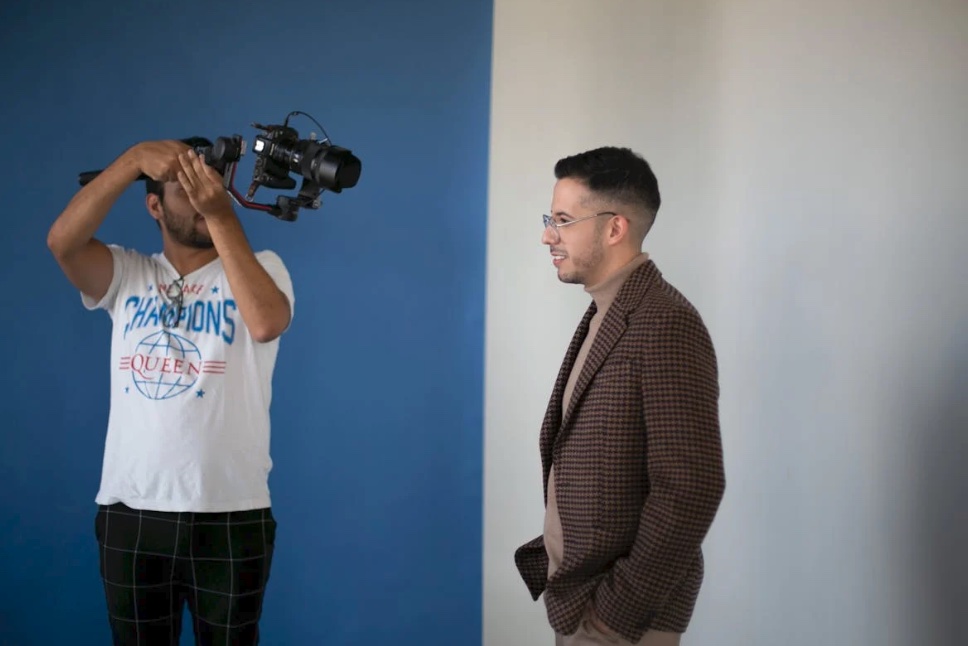
The most common mistake you see in business portraits: it looks like you are being photographed from above. This diminishes your image and makes you look like you are constantly asking for something instead of projecting confidence.
Why it happens.
The reason is simple and almost always the same: the camera is too high. Your photographer is most likely shooting handheld and not using a tripod to set the correct camera height. As a result, the portrait is taken from the photographer's eye level, which has nothing to do with how you should be presented.
Also, if you are sitting on a stool, it can make you slouch and appear even lower than if you were standing.
How to do it right.
Make sure your photographer uses a tripod and photographs you standing – but that is only part of the recipe. It is a good start, and even then there is still a high chance of getting the height wrong. It takes years to learn how to do it properly.
Why it matters.
The right camera height puts you in a position of power. It is a subtle adjustment, but we perceive it faster than we consciously realize what is wrong with the image.
2. No tethering.
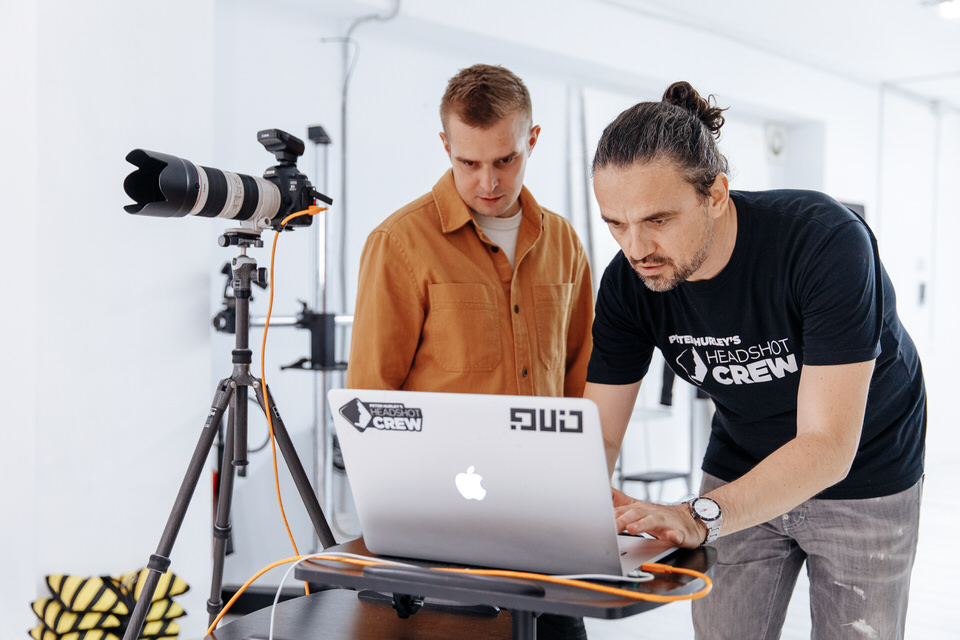
It may seem like your session is going well: the connection between you and the photographer is great, you feel comfortable, and the results look nice – but why is the photographer showing you images on a small camera screen instead of a laptop connected to the camera?
Why it happens.
Many photographers cut corners and do not use tethering – a method where photos are sent directly from the camera to a computer. This allows you to see the results on a larger screen and enables the photographer to adjust lighting, posing, and details more precisely. Instead, they simply show images on the small screen on the back of the camera.
How to do it right.
During the session, the camera should be connected to a computer with a larger screen. This gives you a clear view of the results and allows you to select the best shots during and after the session.
Why it matters.
Each headshot session typically results in hundreds of similar-looking images with subtle differences. To choose the best shots, you need a closer look and the ability to review and select the ones you like – something that is much easier and faster to do on a computer with proper software.
3. Wrong lighting.

Lighting-wise, a commercially viable headshot should be simple. However, simple does not mean easy to execute, and many photographers fail when trying to achieve that simplicity.
Why it happens.
It is not even about gear – low-budget photographers often lack the experience needed to deliver effective results. You say, "I need a business headshot," and your photographer hears, "I need a photo on a white background in a suit," and then executes it in their own way.
How to do it right.
The brightest area should be the eyes–nose–mouth region. Dramatic shadows can work well for other types of portraiture, but not for business headshots.
Why it matters.
Think of a billboard you pass on the highway at high speed. To be memorable, the message must be short and easy to read. The same applies to your headshot on social media.
4. Wrong cropping.
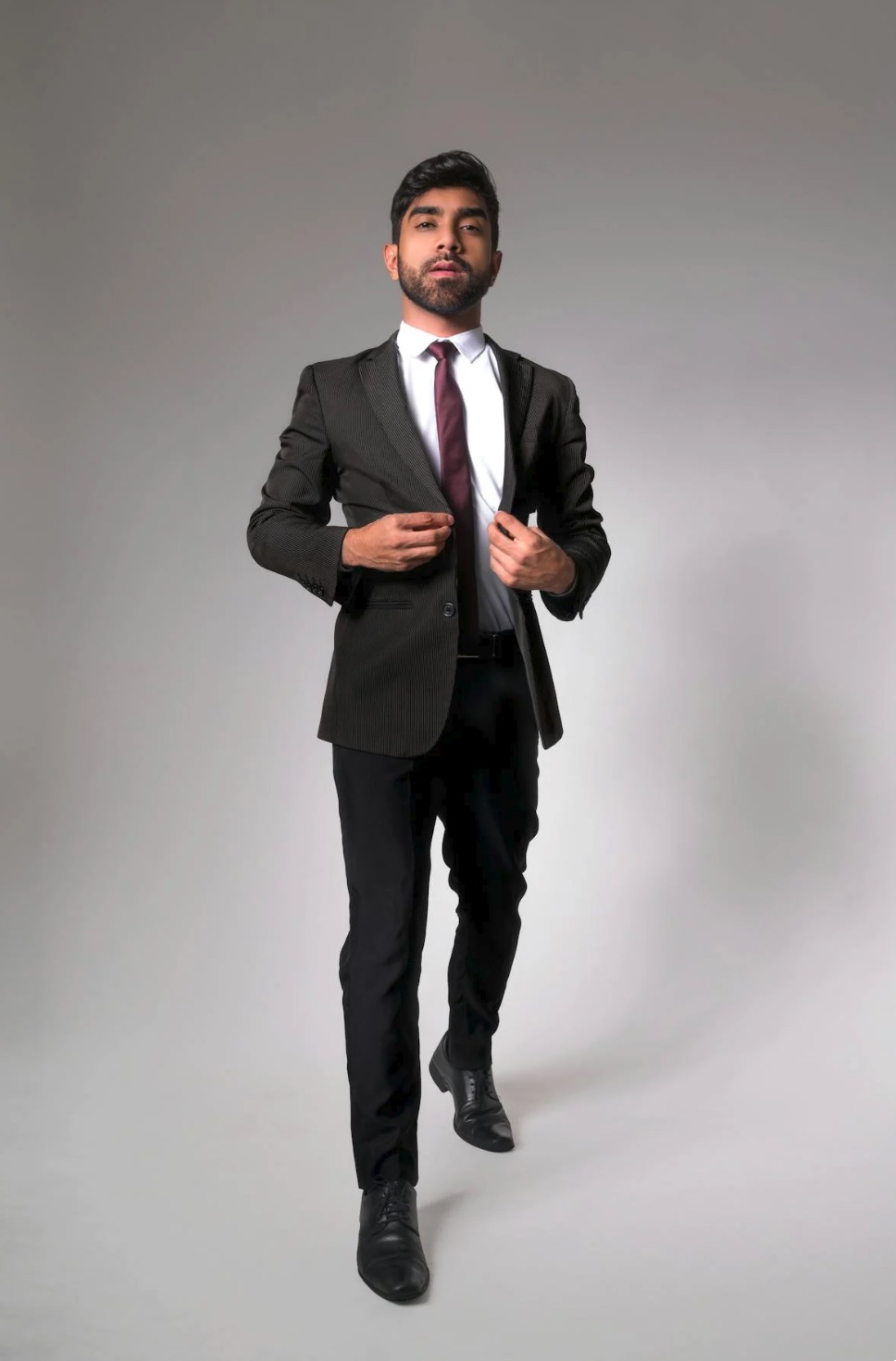
You want to present yourself, so you ask a photographer to take a half- or full-body shot, which you later use as a profile picture.
Why it happens.
There may be many reasons, but most often it is because you have seen similar images and decided you need one too – probably thinking that the more of your body you show in the frame, the better. That can be true in some cases, such as if you are an actor or a model – even then, using a full-body shot as your main profile picture is rarely a good idea.
How to do it right.
Do not use full- or even half-body shots as your profile picture. Be closer to the viewer, both figuratively and literally.
Why it matters.
A properly cropped headshot attracts much more attention. In movies, only leading characters get close-up shots – never extras. You are the leading character of your personal brand, which is why your profile picture should be a close-up headshot. Anything below your shoulders adds virtually no value to your image and only makes your face appear smaller and less significant.
5. Wrong facial expression.

We have long passed the time when corporate headshots were seen as an obligation rather than a tool for building your personal brand.
Why it happens.
Many photographers still treat corporate headshots as a side hustle – something like a passport photo that merely proves a person has a head with eyes, ears, a nose, and a mouth arranged in the proper order.
How to do it right.
Start by browsing the photographer's portfolio. If it is full of headshots with blank expressions, the chances of getting something different and compelling are pretty low. For many people – probably you included – being in front of a camera is not the most natural or comfortable experience. A confident, natural expression does not just happen; it is the photographer's job to help you look that way.
Why it matters.
For a commercially viable headshot, the right expression outweighs everything else. The lighting might be slightly off, the pose imperfect, or the outfit not ideal – but if the expression is confident, approachable, and natural, everything else becomes secondary.
So there they are – the five most common mistakes photographers make during headshot sessions that can ruin your photo: wrong camera height, no tethering, poor lighting, bad cropping, and weak facial expression.
No matter how attractive the pricing looks or how tempting it is to get 50 or 100 images for €1 each, make sure you are getting headshots that actually work – so you do not have to pay again for another session with a different photographer.

Enjoyed this article? Subscribe to the newsletter and get a free book